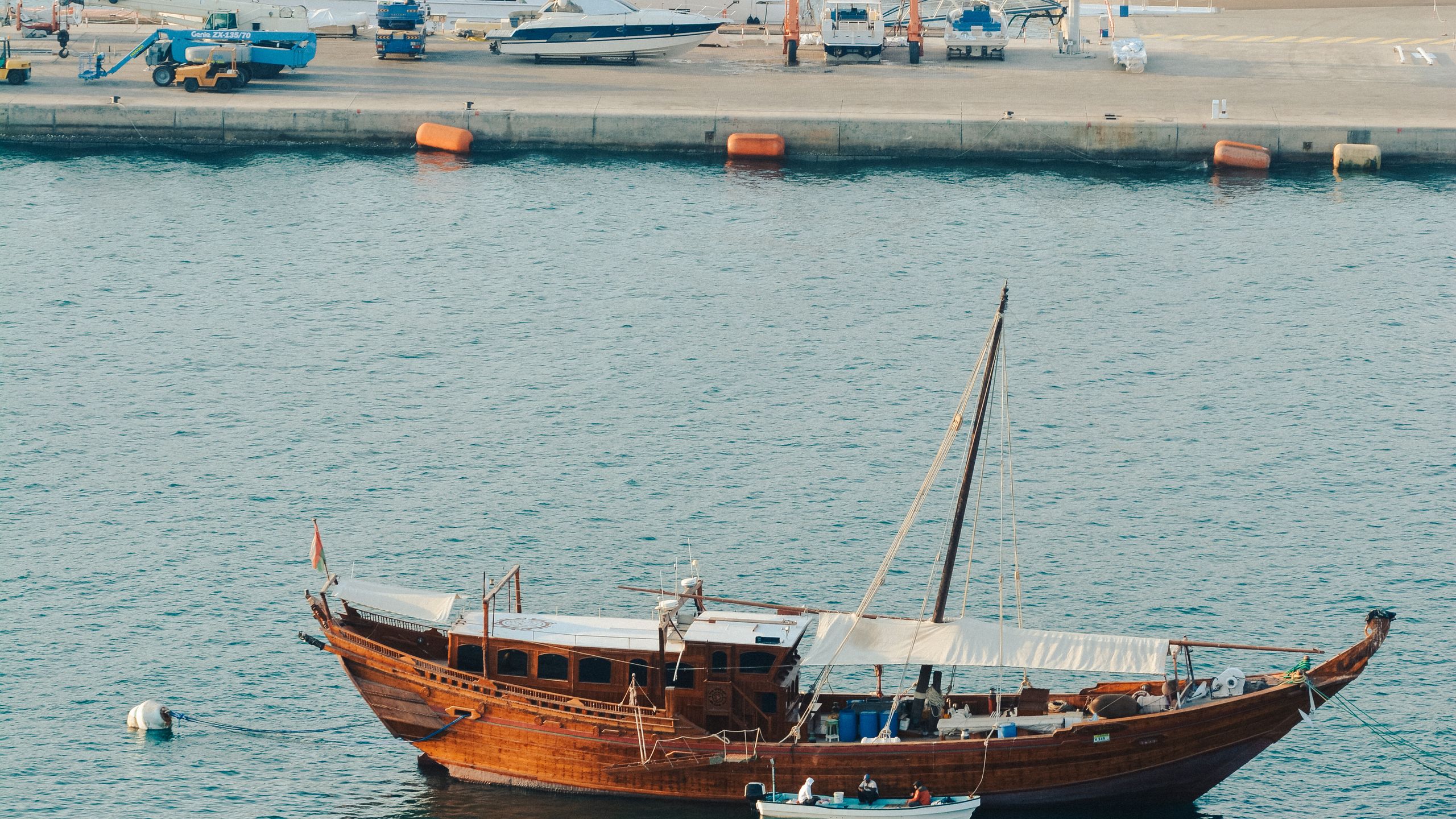
Oman's Dhow: History, Mystery, and Your Next Adventure
Forget the postcard-perfect image of a dhow sailing serenely into a crimson sunset; the truth is, many of Oman's most iconic wooden boats are no longer powered by sail alone, and their beauty often hides a surprisingly rugged, utilitarian past that’s far more fascinating.
When I first moved to Oman, I, like many, pictured dhows as relics, graceful ghosts of a bygone era. I imagined them strictly as tourist attractions, gliding silently across turquoise waters, carrying camera-wielding visitors. But living here, truly immersing myself in the rhythm of the Omani coast, I quickly learned that the dhow is anything but a mere ornament. It is, in its very essence, the beating heart of our maritime heritage, a vessel that has adapted, evolved, and continues to serve, not just as a symbol, but as a living, breathing testament to Omani ingenuity and perseverance.
Join me as we dive deep into the world of the Omani dhow – not just the pretty picture, but the real story, the sounds, the smells, and the undeniable spirit that makes these wooden beauties so much more than just boats. I want to share with you what I’ve learned, the places I’ve visited, and the experiences I’ve had, so you can truly appreciate these magnificent vessels on your next trip to our beautiful Sultanate.
What Exactly Is a Dhow? More Than Just a Boat
At its simplest, a dhow is a traditional sailing vessel, typically with one or more masts equipped with lateen sails. These triangular sails, perfectly adapted for navigating the shifting winds of the Arabian Sea and Indian Ocean, are what give dhows their distinctive silhouette. But to call it 'just' a sailing vessel feels like an understatement. A dhow is a masterpiece of woodworking, a floating testament to centuries of inherited knowledge, and a crucial piece of the economic and cultural fabric of Oman.
When you stand next to a newly built dhow at the Sur shipyard, the sheer scale and craftsmanship are overwhelming. I remember running my hand over the smooth, oiled planks of a partially constructed dhow, the scent of fresh teak and tar thick in the air. The wood felt warm, alive, and even before it touched water, you could sense the history embedded within its grains.
Types of Dhows: A Fleet of Purpose
The term 'dhow' is actually a catch-all, encompassing a variety of designs, each optimized for specific tasks and sea conditions. It’s like saying 'car' when you could be talking about a sedan, an SUV, or a pickup truck. In Oman, you'll encounter several notable types, though many now incorporate engines alongside their traditional sails:
- Baghla: Historically one of the largest and most ornate, known for its distinctive square stern and elaborate carvings. These were the grand merchant ships, sailing to India and East Africa, laden with spices, textiles, and frankincense. You’re more likely to see models or artistic representations of Baghlas today, but their influence is clear.
- Ghanjah: Similar to a Baghla but with a more raked stern, also used for long-distance trade. These were sturdy, reliable vessels.
- Boom: A more streamlined dhow, often used for pearl diving and fishing, but also for cargo. Booms are known for their sharp, pointed bows and sterns, making them fast and agile. Many of the dhows you see for tourist cruises in Musandam are modern adaptations of the Boom.
- Sambuk: A smaller, faster dhow, commonly used for fishing and coastal transport. These are still very much in active use along Oman’s extensive coastline. I’ve seen Sambuks laden with nets and the day’s catch pulling into small fishing villages, their engines sputtering, sails often furled.
- Jalboot: Even smaller, often used as a personal fishing boat or for ferrying goods short distances. These are the workhorses of the individual fisherman.
The Enduring Design: Why Wood Still Matters
Despite the advent of fiberglass and steel, many dhows are still painstakingly crafted from wood, often teak imported from India or local acacia. Why? Because wood offers flexibility, durability, and a certain resilience against the harsh marine environment that other materials struggle to match. The traditional methods, passed down through generations of master builders (known as ustaad), involve no blueprints in the modern sense, but rather a deep, intuitive understanding of form, function, and the materials themselves.
The process is mesmerizing. Planks are bent into shape using fire and water, joints are meticulously fitted, and the hull is sealed with traditional materials like tar and shark oil. The smell of burning wood, salt, and tar is unforgettable – a primal aroma that connects you directly to centuries of seafaring tradition.
A Journey Through Time: The Dhow's History in Oman
Oman's identity has always been inextricably linked to the sea. From ancient mariners charting courses across vast oceans to modern-day fishermen plying coastal waters, the dhow has been their constant companion, a silent witness to millennia of history.
Ancient Origins: Sailing into the Unknown
The exact origin of the dhow is debated, with theories pointing to India, Persia, or even earlier civilizations in the Arabian Peninsula. What is certain is that variations of these lateen-rigged vessels have plied the waters of the Arabian Sea for at least two millennia, if not more. Archaeological evidence suggests Omani mariners were trading as far as Mesopotamia and the Indus Valley as early as the 3rd millennium BC.
The Omani Empire, particularly from the 17th to the 19th centuries, was a formidable maritime power, stretching its influence across the Indian Ocean to East Africa. Dhows were the backbone of this empire, carrying frankincense from Dhofar, copper from Sohar, and dates from the fertile interior, exchanging them for spices from India, timber from East Africa, and silks from China. These weren't just cargo ships; they were vehicles of cultural exchange, carrying ideas, religions, and people across vast distances.
The Golden Age of Trade: Frankincense, Spices, and Slaves
During its zenith, Omani dhows navigated treacherous waters, braved monsoons, and connected disparate cultures. The routes were often long and perilous, demanding skilled navigation and courageous crews. Imagine being on board for months, the creak of the timbers your constant lullaby, the vast, star-studded sky your only map. I can only imagine the stories those waves could tell.
While the romantic image of dhows conjures tales of exotic spices and pearls, it's also important to acknowledge their role in less savory aspects of history, including the slave trade that operated across the Indian Ocean for centuries. This complex past is part of the dhow's legacy, reminding us that history, like the sea, has many currents.
Modern Adaptations: From Sail to Engine
With the advent of steamships and later, modern cargo vessels, the traditional dhow's role as a primary long-distance freighter diminished. However, it didn't disappear. Instead, it adapted. Engines were introduced, often supplementing or even replacing sails entirely for efficiency and speed. Today, while you might see a dhow with its lateen sail unfurled for a tourist cruise, most working dhows rely heavily on powerful diesel engines, reserving sails for emergencies or fair winds.
This evolution is a testament to the dhow's enduring utility and the Omani people's pragmatism. It's a living tradition, not a fossilized one, continuously finding new ways to serve the needs of a modern nation while holding onto its deep historical roots.
Where to Experience Dhows in Oman: My Top Picks
If you're anything like me, reading about these majestic boats will make you want to experience them firsthand. Luckily, Oman offers incredible opportunities to do just that, from leisurely cruises to witnessing their construction.
Musandam: The "Norway of Arabia" Aboard a Dhow
Without a doubt, a dhow cruise in the Musandam Peninsula is an absolute must-do. This dramatic region, with its towering fjords (known as 'khors'), crystal-clear waters, and secluded coves, feels custom-made for dhow exploration. I've been several times, and each time, it takes my breath away.
- What to Expect: Most tours depart from Khasab and take you deep into the Khor Sham fjord, past small fishing villages, and often to Telegraph Island. You'll likely spot dolphins playing in the bow waves – a truly magical experience. The water is often so clear you can see to the bottom, and snorkeling opportunities are plentiful.
- Practical Details:
- Duration: Half-day (4-5 hours) or Full-day (6-8 hours). I recommend the full-day for a more relaxed experience.
- Prices: Group tours typically range from OMR 20-30 per person for a half-day, and OMR 35-50 for a full-day (including lunch and refreshments). Private dhow charters can range from OMR 150-300+ depending on the size and amenities.
- Best Time to Visit: October to April, when the weather is cooler and the sea calmer. Avoid the peak summer months (June-August) unless you love intense heat.
- Local Tip: Book in advance, especially during peak season or public holidays. Many tour operators in Khasab offer similar packages, but ask for a dhow that has comfortable cushions and perhaps a shaded upper deck for better views. Don't forget your swimwear, towel, sunscreen, and a waterproof camera! The journey from Muscat to Khasab is about 500 km by road (via UAE), or a short flight to Khasab airport.
Sur: The Heart of Dhow Building
To truly understand the soul of a dhow, you need to see where it's born. Sur, a coastal city about 150 km southeast of Muscat, has been Oman's premier dhow-building center for centuries. It's a place where time feels like it moves a little slower, and the traditions are deeply ingrained.
- What to Expect: Head to the dhow yards along the creek, particularly near the Sur Bridge. Here, you can witness master craftsmen at work, using tools and techniques passed down through generations. It’s a noisy, dusty, fascinating place, filled with the rhythmic thud of hammers, the whine of saws, and the rich scent of wood and tar. It's not a museum; it's a living workshop.
- Practical Details:
- Opening Hours: The yards are active during daylight working hours, typically 8 AM to 5 PM, Saturday to Thursday. Mornings are often best for seeing the most activity.
- Prices: Entry is generally free, but it's polite to ask permission before wandering too far or taking close-up photos of the workers.
- Local Tip: Don't be shy! If you see an ustaad (master craftsman), a friendly greeting ('Assalamu Alaikum') and a genuine show of interest often lead to fascinating conversations. I once spent an hour chatting with an older craftsman who spoke no English, but through gestures and a few shared Arabic words, he conveyed so much about his life’s work. It was an unforgettable interaction. Combine your visit with a trip to the Sunaysilah Fort for panoramic views of the city and creek.
Muscat: Sunset Cruises and Coastal Charms
Even in the capital, you can experience the magic of a dhow. Many tour operators offer sunset cruises or half-day trips along Muscat's stunning coastline, providing a different perspective of the city's rugged mountains and pristine beaches.
- What to Expect: These cruises typically depart from Marina Bandar Al Rowdha or Al Mouj Marina. You'll glide past Al Bustan Palace, the Royal Palace, and the ancient forts of Al Jalali and Al Mirani, all bathed in the golden light of the setting sun. It's a beautiful, relaxing way to end a day of sightseeing.
- Practical Details:
- Duration: Typically 2-3 hours for a sunset cruise.
- Prices: Around OMR 15-25 per person for a group tour, including refreshments.
- Best Time to Visit: October to April for comfortable temperatures.
- Local Tip: If you're staying at one of the luxury hotels along the coast, check if they offer their own private dhow cruises; these can be a more intimate experience. Ask if they offer traditional Omani coffee and dates on board – it adds a wonderful touch.
Other Coastal Towns: Authentic Local Experiences
While Musandam, Sur, and Muscat are the main hubs, you can find dhows in many smaller coastal towns. Places like Shanna, a port for ferries to Masirah Island, or even sleepy fishing villages, will often have active dhows. These are less about tourist cruises and more about witnessing the dhow in its everyday working environment.
Planning Your Dhow Adventure: My Personal Advice
To make your dhow experience truly unforgettable, here are a few things I've learned from my own travels around Oman.
Booking Your Trip: Don't Leave It to Chance
For popular dhow cruises, especially in Musandam, I always recommend booking in advance. While you might find a last-minute spot, it's safer to secure your place, particularly during peak tourist season (October to April) or during local holidays like Eid. Many reputable tour operators have online booking systems, or your hotel can assist.
What to Expect and What to Bring: Be Prepared
- Comfortable Clothing: Light, breathable clothing is best. For women, while on the dhow, modest swimwear is fine, but have a cover-up for when you're not swimming, especially if visiting local villages.
- Sun Protection: The Omani sun is intense. A wide-brimmed hat, sunglasses, and high-SPF sunscreen are non-negotiable.
- Footwear: Flip-flops or sandals are perfect for easy on-and-off.
- Swimwear and Towel: Essential for Musandam cruises!
- Camera: You'll want to capture the stunning scenery and marine life. Consider a waterproof option for snorkeling.
- Snacks and Drinks: While most cruises provide refreshments, it's always good to have extra water, especially on longer trips.
- Cash: Small Omani Rials might be useful for tips or small purchases if you stop at a local shop.
Local Etiquette and Tips: Respecting the Culture
- Modesty: While on tourist dhows, the atmosphere is generally relaxed. However, if your dhow stops near a local village, it's respectful to dress modestly when on shore.
- Asking Permission: If you're visiting a working dhow yard or a local fishing dhow, always ask permission (even with a gesture) before taking photos of people.
- Engage with the Crew: Omani hospitality is legendary. Many dhow captains and crew members are incredibly knowledgeable and love to share stories. A simple "Shukran" (thank you) goes a long way.
- Go Early: For dhow yard visits in Sur, early morning offers the best chance to see the craftsmen in full swing before the midday heat.
Beyond the Tourist Trail: Deeper Dhow Experiences
If you're looking for something truly unique, consider a multi-day private dhow charter. While pricier, these allow you to explore more remote areas, spend nights under the stars on deck, and truly immerse yourself in the rhythm of the sea. Some operators offer specialized trips, like fishing expeditions or even cultural exchanges with isolated coastal communities. This is where the dhow truly transforms from a mode of transport into a living bridge to Oman’s soul.
The Dhow's Legacy: More Than Just a Boat
The dhow is more than just a wooden vessel; it is a symbol of Oman's resilience, its deep connection to the sea, and its rich history as a maritime nation. It embodies the spirit of exploration, trade, and cultural exchange that has defined this land for millennia.
As I stand on the deck of a dhow, feeling the gentle sway of the ocean beneath me, listening to the creak of the wood and the distant call of gulls, I don't just see a boat. I see generations of Omani sailors, merchants, and fishermen. I smell the frankincense that once filled its holds, hear the echoes of ancient trade languages, and feel the spirit of adventure that propelled these vessels across vast, unknown oceans.
Ready to Set Sail?
So, there you have it – the true story of the Omani dhow, from its ancient origins to its vibrant present. It’s a tale not just of wood and sails, but of human spirit, adaptation, and an enduring legacy that continues to shape this incredible country. When you visit Oman, don't just admire these boats from afar. Step aboard, feel the breeze, smell the sea, and let the dhow carry you on your own unforgettable journey into the heart of Omani culture. I promise you, it will be an experience you'll cherish long after you've returned home. The waves are calling, and your Omani dhow adventure awaits!
Written by Farees
Travel writer and founder of Oman Explorer. Based in Muscat, Oman, with years of experience exploring the Sultanate's hidden gems, ancient forts, stunning wadis, and desert landscapes. Passionate about sharing authentic travel experiences and helping visitors discover the beauty of Oman.
Learn more about the authorMore Articles to Explore


Comments (0)
Sign in to comment
Create a free account or sign in to join the conversation.
No comments yet. Be the first to comment!