Flora and Fauna in Oman
Oman is far greener and wilder than its deserts suggest. After a good rain, the dry land bursts into flower, wild goats roam the high peaks, and the coastal waters teem with fish, dolphins and turtles.
This guide takes you through the plants, animals, birds and sea life that make the Sultanate one of the most surprising natural landscapes in Arabia.
When the Desert Blooms: Oman's Plant Life
Oman's flora depends almost entirely on rainfall. After heavy rains, small plants and flowers appear everywhere, including familiar northern species such as the tiny wild pansy and the cowslip. In those weeks, the desert truly blooms.
Life in the wadis
The wadis (valleys and seasonal riverbeds) are the green heart of the country. Oleander thrives here alongside grasses, bulrushes and sedge. In the deeper valleys grows sawga, a plant with a fragrant orange flower.
The cultivated gardens along the wadi beds are a delight in early spring. In places such as Wadi Bani Kharus you can see peach, apricot and almond blossom, as well as celandine, speedwell and a small kind of dandelion.
Plants of the open ground
The most common plant on open ground is the camel-thorn, known locally as knib or nabag. Children eat its leaves as sweets. Spiky acacias are also widespread, including samra and sunt, which carry yellow, mimosa-like flowers.
The ashgar, or sodom-apple, with its purple flowers, grows happily in poor soil. On the hillsides, small trees called surra burst into flower in spring.
Jebel Akhdar: the Green Mountain
As its name suggests, the Jebel Akhdar supports richer vegetation than most of Oman. Its plateaux carry steppe-like cover of low scrub, bushes and small trees. Plants found here include:
The Oman violet, a pink and purple mountain flower also found in Persia
Cotton plants and wild potatoes
Species related to Alpine plants of the Mediterranean, thought to be survivors of the last Ice Age
Northern and Indian species such as primula, violet, juniper and honeysuckle, plus coarse grasses
In a year of good rain, the well-wooded northern face of the mountain hosts Juniperus macropoda, Euphorbia, Euryops pinifolius, Sagaretia, Ephedra, asparagus, Dodonaea viscosa and Periploca aphylla, along with several kinds of thistle. There is also but, a thorny tree with black berries that the tahr (wild mountain goat) feeds on.
Useful and poisonous plants
Some plants have long had practical uses. The thorn apple has served as a source of anaesthetic. The yellow flowers of Carthamus tinctorius yield henna, which Omani women use as a face cosmetic.
Other plants are best admired from a distance. Calatropis has a pretty pink flower but is poisonous, and one desert bush oozes a toxic white, glue-like sap.
The Falaj: Oman's Lifeline of Water
Much of Oman's greenery owes its life to the falaj, a centuries-old system for sharing water among those with an established right to it. The word usually describes the network of irrigation channels downstream of the water's source. There are two main types:
Ghayl falaj: a channel that taps water flowing in the upper gravels of a wadi. It takes far less labour to build, and although the channel may run for several miles, the water comes straight from a wadi source. A falaj in Wadi Samail, for example, divides and runs both east and west of the hills.
Qanat falaj: a man-made underground tunnel that brings water to the surface. Its route is marked by a line of access holes dug during tunnelling, which are left open afterwards as inspection vents.
The falaj supports more than farms. Small fish living in the channels eat debris and nibble at bathers' toes, helping to keep the water clean.
Wildlife: From Legendary Oryx to Desert Hedgehogs
The Arabian oryx: the real unicorn?
The dictionary calls the unicorn "a mythical and heraldic animal", but the legend may have started with the Arabian oryx. Seen from a distance, its two long, straight horns look like one, and now and then an oryx grows only a single horn.
This graceful white antelope once roamed in large numbers south-west of Muscat, especially on the Jiddat al Harasis. Sadly, hunting parties from the Gulf states drove it to the edge of extinction in the wild. Its horns were prized, wrongly, as an aphrodisiac and as a cure for snake-bite. Fortunately, several herds survive in captivity, including one belonging to Shaikh Qasim ibn Hamad al Thani of Qatar, and these private herds are helping to secure the species' future.
The tahr: Oman's own mountain goat
Several species are found nowhere but Oman. The best known is the tahr, or Jayakar's mountain goat (Hemitragus jayakari). It is named after Dr Jayakar, the resident surgeon at the British Agency in Muscat from 1870 to 1900.
The tahr is shy and wary and keeps to high, remote places. It stands about two feet tall, with a light sandy-brown coat and a striking black crest along its back. The crest is strongest in males and absent in the young. It has a large black muzzle and a pale streak running from the front of each eye to the corner of the mouth.
Both sexes carry horns, rarely over sixteen inches long, which curve back behind the ears like an ibex's. In fact, Arabic uses the same word, wa'al, for both animals. Once common, the tahr became endangered because it was hunted for its meat, which is considered especially good in the female. Conservation work is now under way, and game wardens protect it in Jebel Aswad.
Gazelles
The gazelle, or dhabi, was once plentiful, but hunting has reduced it to very small numbers. The same is true of the Marica gazelle, or rhim (Gazella subguttorosa marica), which used to live on the edge of the Rub' al-Khali (the Empty Quarter). As early as 1968, the Goitred gazelle (of which the Marica is a race) and the Dorcas gazelle were already threatened by over-hunting.
The ibex is also found here and is believed to be the ancestor of the domestic goat.
Hunters and scavengers
Foxes are common, and leopards, wildcats and genets still survive. The presence of leopards in Musandam has been confirmed. Wolves howl in the mountains of the Jebel Akhdar and Dhofar, where striped hyenas and porcupines also live. The desert-dwelling Omani wildcat is rarely seen.
Small mammals
Oman is home to the hyrax (the "coney" of the Bible), the Arabian hare and the black hedgehog (Paraechinus hypomelas). This rare relict species lives only in Oman, South Yemen, Iran and Russian Turkestan. The Ethiopian desert hedgehog is far more common.
Other small creatures include jerboas, Cheesman's gerbil, the spiny mouse, common mice and rats, and several kinds of bat. Among them are the Egyptian fruit bat, the Oman mouse-tailed bat and the grimly named naked-bellied tomb bat.
Reptiles
Lizards live throughout the country. Some grow up to two feet long and can be aggressive, while others are eaten by the Bedu when needed.
Oman's snakes include the horned viper (Cerastes cornutus), found in many areas, and a tiny boa that lives in the sand. The harmless colubrid snake lives in wet wadis. There are also puff adders and other vipers, including a rare horned species (Pseudocerastes persicus) found on the Jebel Akhdar.
In the wadis, freshwater snails and toads are plentiful. Small fish in wadi pools have a mysterious habit: they reappear even after a pool has been dry for years.
Insects and creepy-crawlies
Oman's butterflies are spectacular, especially around the Jebel Akhdar and the Qara mountains of Dhofar. Species include charaxes, danaidae, nymphalidae, pieridae, lycaenidae and hesperidae, along with the milkweed butterfly. The Jebel Akhdar also has large dragonflies and several rare butterflies.
Less welcome are hairy spiders three to four inches long with a nasty bite, scorpions, and centipedes up to six inches long. Black beetles, flies, mosquitoes near pools and biting ants are common too. Termites build conical mounds on the Salala plain, much like those in Africa.
When locust swarms arrive, the Bedu welcome them. They catch and eat the insects, and in years when locusts destroy the crops, mounds of them are sold in town markets as a kind of compensation.
Despite all this variety, wildlife here can take patience to find, and visitors are unlikely to meet many of the less pleasant species.
Birds of Oman
Oman has a wide range of birds, rare and common, migratory and resident. Large flocks of magpies and crows fly along the Batina coast, and the palm groves ring with constant birdsong.
Along the coast: flamingoes, herons, gulls, ducks, geese, waders and terns, plus the coastal hooded crow
Inland: Francolin partridge, sand grouse, bulbul and the timid, beautiful bee-eater
Over the mountains: soaring eagles, kites, falcons and Egyptian vultures, which are seen almost everywhere and stand out with their black and yellow colouring
Smaller songbirds: the rock-thrush, Upcher's warbler, the brown babbler, the yellow-vented bulbul, Hume's chat and the Arabian wheatear
Falconry
Falconry is the great sport of Arabia, though in Oman it is mostly practised by the tribes of the Dhahira. Two kinds of hawk are used, the peregrine and the gyrfalcon. They are flown at McQueen's bustard (a winter visitor), rabbits, hares (Lepus capensis omanensis) and sometimes small gazelle.
Domestic Animals
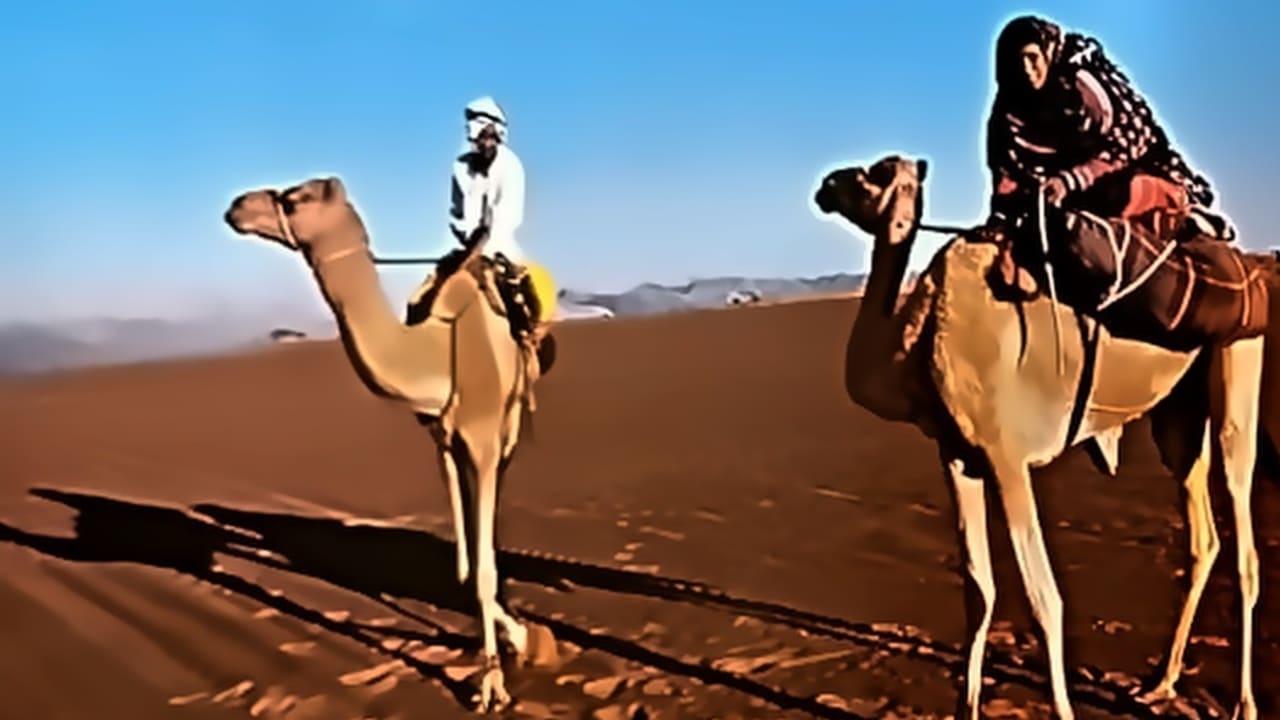
The usual farm animals in this part of Arabia are goats, sheep, chickens and cattle, the last in small numbers except in Dhofar. Dogs are common too, including the elegant saluki, as are cats. On the whole, the land suits goats better than sheep. The grazing and water rights of the Bedu are governed by long tradition.
Omani camels rank among the finest, fastest and most graceful in Arabia. The donkeys of the Jebel Akhdar are some of the toughest and most sure-footed anywhere, with more stamina than the hardworking donkeys of the plains and lowlands.
A Proud Tradition of Horses
For centuries, Oman exported horses to India on a large scale. Marco Polo, writing in the thirteenth century, mentioned the trade in fine Arabian horses from Dhofar and Qalhat. In the fourteenth century, Ibn Batuta described the export of thoroughbreds from Dhofar. In the sixteenth century, Albuquerque wrote of horses shipped from Qalhat, Muscat and Khor Fakkan, and of horse and cattle breeding around Sohar.
Trade records show Oman was still sending horses to India in the first half of the nineteenth century, many of them as army mounts, though some may have come from Persia.
Famous breeders
The Bani Battash of the Wadi Tayyin area, inland from Quriyat, were among the best-known horse breeders.
The Bani Jabir, the largest tribe in Oman, trace their descent from the ancient Arab tribe of Dhubyan, celebrated in Arab poetry. They were also renowned for their horses.
Omani tradition says the Ya'rubi Imam Saif ibn Sultan kept no fewer than 90,000 horses in his regular army, not counting those owned privately. Even allowing for exaggeration, that is a remarkable number for a country with so few horses today. Other records mention thousands of horses in various campaigns.
This tells us something important. Until fairly recently, Oman was a major horse-breeding nation. Feeding and grazing so many animals required irrigated land, so the area under cultivation in earlier times must have been far larger than it had become by 1970.
Royal studs
Oman's rulers have long loved horses. The traveller Wellsted, who visited in 1835, described the stud of Sayyid Said ibn Sultan:
"Several of the Imam's horses are of the noblest breed in Najd, some of his mares being valued at from 1,500 to 2,000 dollars; and one horse, the most perfect and beautiful creature I ever saw, was considered to be worth an equal sum. He maintains a portion of his stud at Muscat; but the greater number is at Barka and Suweik, where they pay great attention to the breed and rearing of these noble animals."
The present Sultan's interest in horses continues this long Omani tradition.
Marine Life: Oman's Living Seas
Crabs on the beach
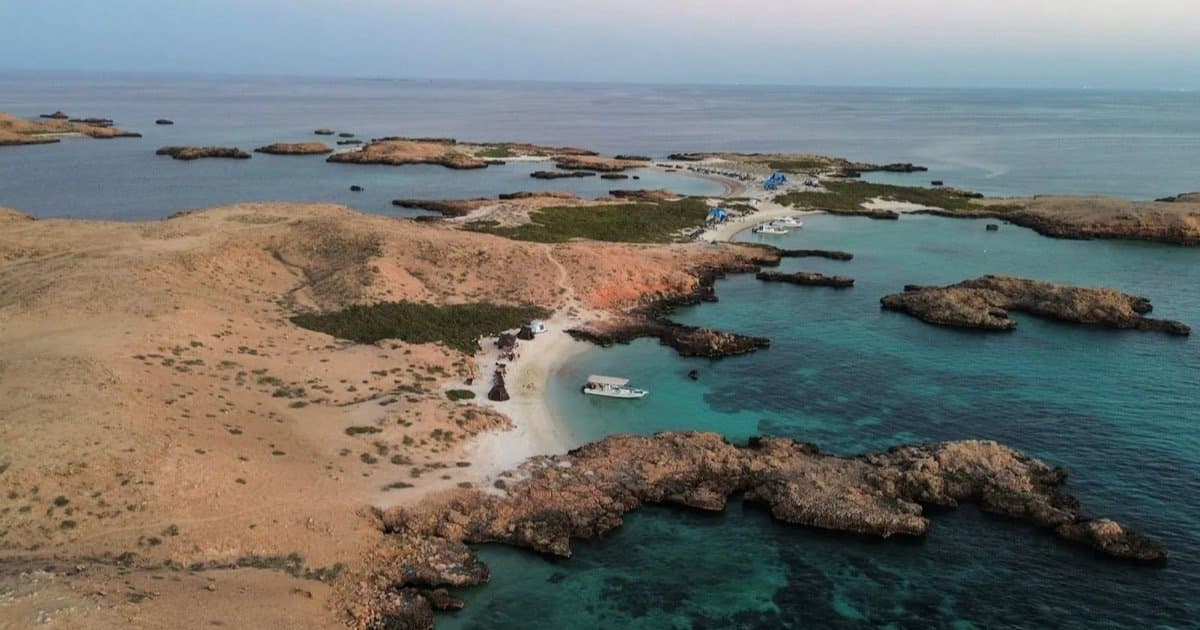
The long sandy beach of the Batina comes alive with crabs. They pop out of their burrows and scuttle into the sea like visitors from another planet, antennae raised. Their cousins, the hermit crabs, gather in groups and swap shells, which clack as they rub together. These crowds of crabs are a sign of how rich Oman's coasts are in marine life.
Fish of every kind
The sea off Muscat is so full of fish that it seems to boil. Its waters hold:
Whales, whale sharks and sharks, though shark attacks on people in Omani waters are extremely rare
Swordfish, sailfish, tuna, kingfish, king mackerel, barracuda, garrupa and rays
Flying fish and brightly coloured tropical fish such as parrot fish and angel fish
Snappers and sardines
Dolphins and playful whales
Schools of dolphins play in Muscat harbour and often ride the bow waves of wooden boats. Whales can be just as playful. The explorer Bertram Thomas recalled one encounter:
"A playful whale helped to beguile the moments – a ponderous dark green monster that came and lay alongside us like a submarine beside its parent ship, proud to prove itself not much smaller than the Fath as Salam. It seemed to me perilously friendly as it dived just under us, to rise but a few feet away and break surface with a snort, before sinking heavily again, with a little wash and multitude of bubbles to mark its going. Nor were our sailors unconcerned. With an eye on our dinghy, which lapped about astern of us, they kept up a frightening din by drumming empty kerosene tins. The wind freshened to deliver us, and by noon we came close hauled to Risut where I landed."
(The Fath as Salam was the local boat Thomas was travelling on.)
Reefs, rocks and shells
Among the rocks, red, green, yellow and purple coral shelters colourful crayfish and crabs. Moray eels with vicious barbed teeth live here, along with many kinds of jellyfish, sea anemones, sea slugs and sea urchins.
In some early summers, the sea fills with jellyfish, from blue Portuguese men-of-war to long purple strings of jelly. Molluscs are abundant too, including cowries, volutes, cones, bivalves and clams, and collectors turn their shells into charming jewellery. At certain times of year, orange plankton tints the water and glows at night.
Turtles of Masira Island
Around the first century AD, the author of the Periplus of the Erythraean Sea noted that Masira Island exported a good deal of fine tortoiseshell. The island is still famous for its turtles, and several of the world's known species have been recorded on its shores.
Pearls
Oysters live off Oman's coast, but pearling never mattered here as much as inside the Gulf. There, the waters are shallower and don't drop away quickly into deep ocean. Even so, some pearl diving continued until the 1960s, and Muscat has at times been an important market for pearls and mother-of-pearl.
Protecting Oman's Wildlife
The Jebel Akhdar is the natural home of many of Oman's rarer animals. With the Sultan's approval, it was chosen as the site for a national park where they can be protected. Local tribesmen are working with the project and are compensated for the loss of their traditional hunting grounds.
Besides the black hedgehog and the spiny mouse, the mountain shelters well-camouflaged toads, the black-and-yellow Egyptian vulture, large dragonflies and a number of rare butterflies. Together with captive oryx herds, game wardens for the tahr and new efforts to save the desert gazelle, these measures give real hope that the decline of Oman's wildlife can be reversed.
From spring blossom in the wadis to whales off Muscat, Oman rewards anyone willing to look a little closer.
Written by Farees
Travel writer and founder of Oman Explorer. Based in Muscat, Oman, with years of experience exploring the Sultanate's hidden gems, ancient forts, stunning wadis, and desert landscapes. Passionate about sharing authentic travel experiences and helping visitors discover the beauty of Oman.
Learn more about the authorMore Articles to Explore

Comments (0)
Sign in to comment
Create a free account or sign in to join the conversation.
No comments yet. Be the first to comment!