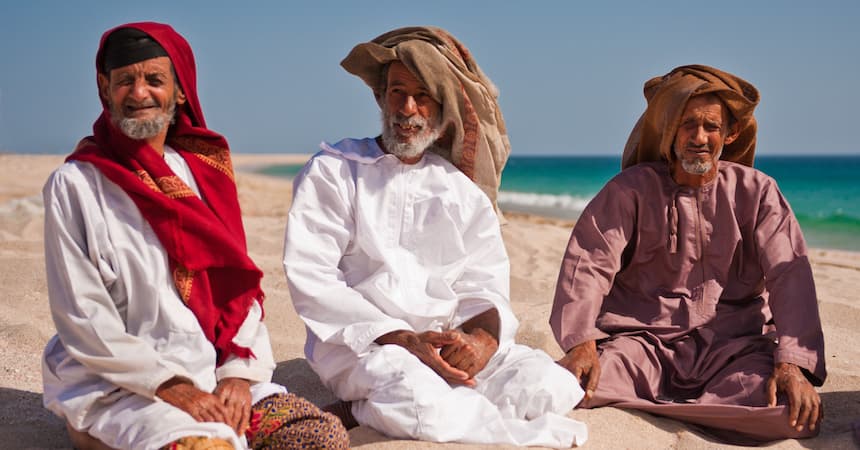
Omani Arabic
A Friendly Guide to Common Omani Arabic Phrases
When you travel in Oman, you’ll quickly discover that language is more than just a tool for communication—it’s a doorway to the country’s famous warmth and hospitality. Even a few simple Arabic phrases can lead to smiles, spark conversations, and make your travel experience much richer. While English is widely spoken in cities and tourist areas, using a few words of Arabic shows respect and openness, and often opens doors to genuine interactions with Omani people.
Omani Arabic has its own gentle accent and unique expressions. Here are some essential phrases, explained in context, so you’ll know not just what to say, but when and how to use them.
1. Greetings & Polite Conversation
In Oman, greetings are a vital part of daily life. Whether you’re meeting someone for the first time, walking into a shop, or passing a stranger in a village, starting with a warm greeting sets a positive tone.
As-salamu alaykum
(Peace be upon you)
The universal greeting in Oman and across the Arab world. Use it like “hello”—when you enter a shop, meet someone new, or greet your hosts.Wa alaykum as-salam
(And peace be upon you too)
The standard reply to “As-salamu alaykum.” Responding promptly is a sign of respect and friendliness.Sabah al-khair
(Good morning)
Use this phrase until midday. It’s especially appreciated in hotels, cafes, or when you’re starting a conversation in the morning.Masa’ al-khair
(Good evening)
Use this in the late afternoon or evening as a polite way to greet someone after dark.Tasharraftu bima’rifatik
(Nice to meet you)
When introduced to someone, this phrase leaves a wonderful impression.Ma’a as-salama
(Goodbye / With peace)
When you’re leaving, say this to wish your host or new acquaintance well. Omanis may also say it when parting ways after a chat or a meal.
2. Expressing Thanks & Courtesy
Courtesy is fundamental in Omani culture. You’ll find that people are generous with kindness and politeness—and it’s always appreciated when visitors reciprocate.
Shukran
(Thank you)
You’ll use this everywhere: after a meal, when receiving directions, or when someone helps you.Afwan
(You’re welcome / Excuse me / Sorry)
A versatile word. Use it to say “you’re welcome,” to get someone’s attention, or if you accidentally bump into someone.Min fadlak (to a male) / Min fadlik (to a female)
(Please)
Use this when requesting help, ordering food, or asking for directions. The difference in ending (k for male, ki for female) is a small detail, but it’s noticed and appreciated.
3. Asking Questions & Getting Help
Traveling always brings moments when you’ll need a little guidance. These questions will help you navigate markets, ask for prices, or seek help in tricky situations.
Kam ath-thaman?
(How much does it cost?)
Essential for shopping in souks (markets) or when buying snacks at a roadside stall.Ayna al-hammam?
(Where is the bathroom?)
Always useful when exploring or at a restaurant.Hal tatahaddath al-ingliziya?
(Do you speak English?)
While many Omanis do, especially in cities, this polite question helps you switch languages smoothly.Ana laa afham
(I don’t understand)
If you’re struggling with directions or conversation, this phrase invites your conversation partner to slow down, repeat, or switch to English.Naam
(Yes)La
(No)Mumkin musa’ada?
(Can you help me?)
Use this when you need assistance—locals are usually eager to help tourists.Ayna…?
(Where is…?)
Add the place you’re looking for (e.g., Ayna al-mata’am?—Where is the restaurant?).
4. Everyday Scenarios: Using Phrases in Real Life
A. At the Market or Souk
Omani markets are vibrant, colorful, and buzzing with activity. Whether you’re shopping for spices, dates, or souvenirs, here’s how a typical interaction might go:
RiHt souq al-khadhrawaat fi al-mawaleh li awwal marrah
(I went to the vegetable market in Mawaleh for the first time)
This is a great conversation starter if you’re chatting with locals about your day.Mata riHt?
(When did you go?)
They might ask you this to keep the conversation flowing.RiHt ams
(I went yesterday)Wa kaif kaan?
(And how was it?)
Share your impressions—was it crowded, colorful, full of new sights?Kaan hinaak khudhrawaat katheerah wa mazhoum
(There were a lot of vegetables and it was crowded)Aish eshtrayat?
(What did you buy?)Khiyaar wa jazar wa khass
(Cucumber, carrots, and lettuce)
As you handle produce or haggle over prices, always greet the vendor, use “min fadlak” or “min fadlik” when making requests, and say “shukran” when your purchase is complete.
B. Making New Friends
Don’t be surprised if someone strikes up a conversation with you in a café or while waiting in line. Omani people love sharing their culture and hearing about your travels.
Tasharraftu bima’rifatik
(Nice to meet you)
You might be asked where you’re from, what you think of Oman, or even invited to join someone for coffee or a meal. Accepting invitations, even just for a quick coffee, is a wonderful way to experience Omani hospitality.
5. Social Occasions: Birthdays & Invitations
If you’re staying with a host family, meeting new friends, or just want to join in the celebrations, these phrases will help you feel part of the moment.
Mata eid milaadak?
(When is your birthday?)Ath-thulatha al-jaay
(Next Tuesday)Kul sanah wa inta bikhair
(Happy birthday)
Say this to wish someone well on their birthday or any festive occasion.Ta‘aal haflat eid milaadi
(Come to my birthday party)Akeed, wayn bitsawwi al-haflah?
(Sure, where will you have the party?)Fi bayti
(At my house)As-sa‘ah kam haflatak?
(What time is your party?)As-sa‘ah sittah al-masa
(At 6:00 in the evening)
Birthdays are a big deal for Omani families, and guests are always welcome. These phrases can help you both issue and accept invitations graciously.
6. Coffee & Hospitality: The Heart of Omani Culture
Omani coffee, or qahwa, is a symbol of welcome and friendship. Sharing a tiny cup of this spiced brew is a daily ritual, and visitors are always encouraged to try.
tHib al-qahwa al-‘omaniya?
(Do you like Omani coffee?)
You’ll likely hear this question within minutes of entering an Omani home or majlis (guest room).Abadan ma jarrabtaha min qabl
(I’ve never tried it before)
If you’re new to Omani coffee, say this and watch your hosts light up with delight.Tureed tajrabeha?
(Would you like to try it?)Akeed, laish la
(Sure, why not)Basweelek qahwa al-youm
(I’ll make one for you today)
Coffee is always made fresh, often accompanied by dates—don’t refuse, even if you just take a sip.Shukran, hatha min theebak
(Thank you, that’s kind of you)
Show your gratitude for the effort and warmth.Ana aHib ashrab al-qahwa
(I like to drink coffee)Wa ana ba‘ad
(Me too)
Omani coffee is an acquired taste—light, spiced with cardamom and sometimes rosewater or saffron, and always served with dates. Savor every sip and enjoy the moment.
7. Useful Tips for Using Arabic in Oman
Smile and make eye contact: Even if your pronunciation isn’t perfect, your effort will be appreciated.
Use body language: Gestures help bridge gaps when words fail.
Don’t worry about mistakes: Omanis are patient and will often help you find the right word.
Practice with locals: From hotel staff to taxi drivers, most people are happy to help you learn.
Listen for context: Often, you’ll pick up words and phrases just by listening to conversations around you.
Conclusion: Embracing Omani Hospitality Through Language
Learning and using a few Omani Arabic phrases transforms you from a mere tourist into a welcomed guest. Whether you’re navigating a market, sharing coffee in a mountain village, or joining a family for a celebration, these words will help you connect on a deeper level. The smiles you receive, the friendships you form, and the memories you create will last long after you’ve left Oman’s shores.
So next time you hear “As-salamu alaykum,” remember to reply with a smile and a confident “Wa alaykum as-salam.” The adventure is just beginning.
Written by Farees
Travel writer and founder of Oman Explorer. Based in Muscat, Oman, with years of experience exploring the Sultanate's hidden gems, ancient forts, stunning wadis, and desert landscapes. Passionate about sharing authentic travel experiences and helping visitors discover the beauty of Oman.
Learn more about the authorMore Articles to Explore


Comments (0)
Sign in to comment
Create a free account or sign in to join the conversation.
No comments yet. Be the first to comment!