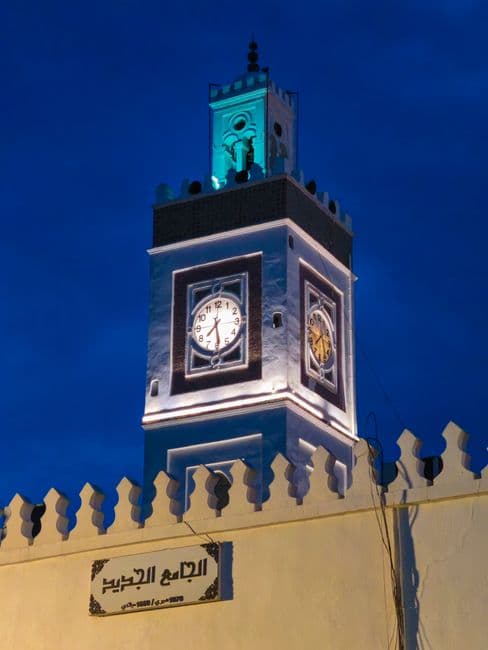
What Time Is It in Muscat Right Now? How I Discovered the Easiest Way to Check
What Time Is It in Muscat Right Now? How I Discovered the Easiest Way to Check
Published on Oman Explorer | Practical Tips for Travelers & Expats
I still remember the moment I landed at Muscat International Airport for the first time, phone half-dead, no local SIM yet, and someone asking me what time our connecting transfer was supposed to leave. I fumbled through three different clock apps, none of which had automatically updated to Oman's timezone. It was a tiny inconvenience in the grand scheme of things — but it stuck with me.
Time, when you're traveling or doing business across borders, is one of those things that seems simple until it suddenly isn't. And if you've ever tried to coordinate a call between, say, London and Muscat, or you're a business in the UAE trying to schedule a video meeting with a supplier in the Muscat Governorate — you know exactly what I mean.
So today I want to share something genuinely useful: a free online tool that gives you the exact current time in Muscat, Oman in seconds, no apps, no sign-ups, no nonsense.
Why Muscat Time Trips People Up
Oman sits in the GMT+4 timezone. No daylight saving time changes. No seasonal adjustments. Sounds simple, right?
In theory, yes. In practice, people get confused for a few reasons.
First, Oman does not observe daylight saving time, which puts it at an unusual offset compared to its Gulf neighbors during certain parts of the year. The UAE is also on GMT+4, so if you're in Dubai or Sharjah, you're in sync with Muscat. But if you're calling from the UK (which shifts between GMT and BST), Germany, or any country that does observe daylight saving time — the offset changes depending on the season, and people consistently get it wrong.
Second, the Muscat Governorate itself spans multiple cities: Muscat city, Seeb, and Bawshar are all within the region, and while they all share the same timezone (Asia/Muscat), people sometimes search for one city and find another, which creates unnecessary confusion.
Third, if you're a digital nomad, a freelancer working with international clients, or just a traveler trying to book tours, activities, or transportation — you often need the precise local time, not an approximate one. "Around 3 PM Oman time" doesn't cut it when you're trying to catch a dhow cruise departure.
The Tool That Actually Solves This
A while ago I came across Time.now's dedicated Muscat Governorate page, and I've been quietly recommending it to people ever since.
Here's what makes it different from just Googling "Muscat time" or checking your phone's world clock:
It shows you the live, updating time — down to the second. There's no ambiguity. The moment you open the page, you see the current time in Muscat displayed in real time, with the GMT+4 offset clearly labeled. No guessing whether the result you're looking at is cached from three hours ago.
It covers all three main cities in the Muscat Governorate. The page lists current local time for Muscat, Seeb, and Bawshar — all confirmed to be on the same Asia/Muscat IANA timezone. If you're working with someone in Seeb and want to double-check, it's right there.
It includes prayer times. This one is more useful than people expect. Oman observes Friday as the official rest day, and many local businesses, government offices, and services in Muscat adjust their hours around prayer schedules. Having a quick prayer time reference alongside the current time is a small but genuinely practical detail for visitors, business travelers, and expats.
It shows moon phase data. Random? Maybe. But if you're planning photography in the Omani landscape, an evening trip to Wadi Shab, or even a night camping excursion in the Wahiba Sands — moon phase matters more than you'd think.
Practical Scenarios Where This Tool Saves You
Let me be specific, because "useful tool" is vague. Here are situations I've personally encountered or heard about from people traveling in Oman:
Scheduling international calls. If you're based in Europe or North America and you're trying to reach an Omani company, hotel, or tour operator during their working hours — you need Muscat's current time. Oman typically operates Sunday through Thursday, with working hours starting as early as 7:30 AM in many government sectors. Knowing it's 9:45 AM in Muscat right now means you're not calling a closed office.
Arrival and departure logistics. Flight times shown on boarding passes are almost always in local airport time. If someone is picking you up from Muscat International Airport and you're relaying your arrival time from a booking confirmation written in your home timezone — there's room for error. Pulling up the Muscat time page lets both parties anchor the conversation to the same reference point.
Remote work and freelancing. If you're a freelancer or remote worker based in Oman working with clients abroad, you've probably had to explain the GMT+4, no-DST thing more than once. Sharing the Time.now Muscat link in a Slack message or email is far cleaner than typing out a timezone explanation every time.
Tour and activity booking. Many smaller tour operators in Oman — especially boat trips, desert safaris, and mountain hikes — have specific departure windows and don't wait. Knowing the exact local time before you head out eliminates the "I thought it was earlier" excuse.
Ramadan and holiday scheduling. During Ramadan and public holidays, business hours in Oman shift significantly. A quick time check combined with knowing the current Islamic calendar date (which the Time.now platform also covers separately) helps you plan which businesses will actually be open when you need them.
A Quick Note on Oman's Timezone Stability
One thing I genuinely appreciate about Oman's approach to timekeeping is how consistent it is. The country runs on a permanent UTC+04:00 offset with no daylight saving adjustments, which means that unlike the chaos that can happen with US timezones or the shifting offsets in Europe, Muscat time is exactly what it says it is, year-round.
This makes tools like the Time.now Muscat page even more reliable. You're not dealing with seasonal exceptions or edge-case DST transition windows. The IANA timezone for the region — Asia/Muscat — is one of the more stable entries in the global timezone database. For anyone building apps, automating workflows, or integrating Omani time into a business tool, that stability is a genuine advantage.
Beyond Just the Time: What Else Time.now Offers
While the Muscat Governorate page is the one I'm highlighting here, the Time.now platform is worth bookmarking for a wider range of needs. A few features that stand out for travelers and expats:
Prayer Times. The platform has a dedicated prayer times section that covers cities globally, including throughout Oman. Useful for planning around prayer schedules during travel or for residents keeping their daily routine while managing international commitments.
Time Zone Converter. If you regularly coordinate between Muscat and another city — London, New York, Dubai, Mumbai — the converter tool lets you input both zones and see the overlap instantly. No mental arithmetic required.
Countdown Timers. Planning a trip? Counting down to a visa renewal date, a flight, or a hotel checkout? The countdown function is genuinely handy for travel planning.
Islamic Calendar. For those navigating Hijri dates alongside the Gregorian calendar — relevant for religious observances, official documents in Oman, and contract timing in some business contexts — having both calendars in one place is practical.
A Few Tips for Using Muscat Time Effectively
If you're going to bookmark the Time.now Muscat page (and I'd recommend it), here are a few habits worth building:
Always confirm time before calling any government office, embassy, or hotel in Muscat. Operating hours in Oman often differ from what's listed on Google, especially during holidays, Ramadan, and national days.
If you're scheduling a meeting across timezones and one party is in Muscat, anchor the meeting time in Muscat local time and send a converted time to the other party — not the other way around. It reduces the chance of the Oman-based contact missing the meeting due to a daylight saving time shift on the other end that they may not have accounted for.
If you're traveling from the UAE to Muscat by road, note that crossing the border doesn't require a time change — both countries run on GMT+4. But if you're coming from Qatar (GMT+3) or Saudi Arabia (also GMT+3), you'll need to add an hour when you arrive in Muscat.
Final Thought
Oman is one of the most underrated travel destinations in the region, and Muscat is a city that rewards people who show up prepared. Knowing the local time accurately — whether you're a first-time visitor, a business traveler, or someone relocating to the Muscat Governorate — is one of those small things that makes everything else smoother.
The Time.now Muscat Governorate page is the quickest, most reliable way I've found to check Muscat local time online, and it's completely free. Bookmark it before your next trip, share it with whoever is picking you up from the airport, and save yourself the confusion.
Safe travels, and as they say in Oman: Marhaba — welcome.
Oman Explorer covers travel tips, expat guides, and practical resources for anyone exploring the Sultanate of Oman. Have a tip or question? Drop it in the comments below.
Written by Farees
Travel writer and founder of Oman Explorer. Based in Muscat, Oman, with years of experience exploring the Sultanate's hidden gems, ancient forts, stunning wadis, and desert landscapes. Passionate about sharing authentic travel experiences and helping visitors discover the beauty of Oman.
Learn more about the authorMore Articles to Explore



Comments (0)
Sign in to comment
Create a free account or sign in to join the conversation.
No comments yet. Be the first to comment!