Al Hoota Cave: Oman's Hidden Gem Near Nizwa
I remember the first time I felt the cool, damp air hit my face, a stark contrast to the searing Omani sun outside. It was like stepping into another world, a secret chamber hidden beneath the rugged Hajar Mountains. The air carried a faint, earthy scent, and the only sound was the gentle drip, drip, drip of water echoing in the vast, silent space. That moment, as I stood at the threshold of Al Hoota Cave, felt less like entering a tourist attraction and more like unlocking one of Oman’s most profound natural mysteries. It’s an experience that stays with you, a vivid memory of raw, subterranean beauty.
As a local who’s explored nearly every wadi, mountain path, and ancient fort this beautiful country has to offer, Al Hoota Cave remains one of those truly unique destinations that consistently captures my imagination. Nestled at the foot of Jebel Shams, Oman's highest peak, and just a stone's throw from the historic city of Nizwa, Al Hoota isn't just a cave; it's a journey into the very heart of the earth, a geological masterpiece sculpted over millions of years.
If you're planning a trip to Oman and seeking something truly extraordinary beyond the desert dunes and coastal stretches, then Al Hoota Cave should be high on your list. It's an adventure that combines natural wonder with a touch of modern convenience, making it accessible for families, solo explorers, and seasoned spelunkers alike. Trust me, you're about to discover an underground world unlike any other.
Unveiling Oman's Subterranean Secrets: Why Al Hoota Calls
Al Hoota Cave offers an unparalleled experience that goes far beyond simply walking through a dark cavern. It’s a multi-sensory journey that engages you from the moment you arrive at the visitor centre. What makes it so special?
- The Electric Train Ride: This isn't your average cave tour. Your adventure begins with a charming electric train ride – the only one of its kind in Oman – that whisks you through a short, scenic tunnel directly into the cave entrance. It’s a delightful prelude, building anticipation with every click-clack of the wheels.
- Ancient Geological Formations: Prepare to be awestruck by the sheer scale and intricate beauty of stalagmites, stalactites, flowstones, and columns. These formations, some millions of years old, tell a silent story of water, time, and geological processes.
- Unique Ecosystem: Al Hoota is home to a fascinating underground ecosystem, including the famous blind fish (Garra barreimiae) that have adapted to life without light. Glimpsing these pale, translucent creatures in the cave's subterranean lake is a truly unique privilege.
- Cool Respite: In Oman’s often intense heat, the cave offers a natural air-conditioned escape. The constant cool temperature inside is a welcome relief, allowing for a comfortable exploration regardless of the season.
The Journey Begins: All Aboard the Cave Express!
After parking your car and making your way to the modern, well-appointed visitor centre, the excitement truly begins. The initial steps involve purchasing your tickets and perhaps browsing the small but interesting geological exhibit, which gives you a fantastic primer on how these natural wonders are formed. But the real highlight of the preamble is, without a doubt, the electric train.
Stepping onto the brightly coloured train, I always feel a childlike thrill. It’s a short ride, perhaps only a few minutes, but it's incredibly effective at transporting you from the bright, dusty world outside into the cool, dark embrace of the mountain. The tunnel is dimly lit, and as the train chugs along, the sounds of the outside world fade, replaced by the hum of the train and the growing anticipation of what lies ahead. It’s a brilliant way to transition, preparing your senses for the profound darkness and natural grandeur that awaits.
The train drops you off right at the mouth of the accessible portion of the cave. From there, it’s a short walk along a well-maintained, illuminated pathway, and then, the cave truly opens up before you.
Stepping Inside: The Majesty of Al Hoota's Depths
The moment you step off the train and onto the cave's designated walking path, a profound sense of awe washes over you. The air is noticeably cooler, carrying a humidity that smells fresh and earthy. The path is well-lit, but the sheer scale of the cavern still means that your eyes need a moment to adjust to the subtle interplay of light and shadow on the ancient rock formations.
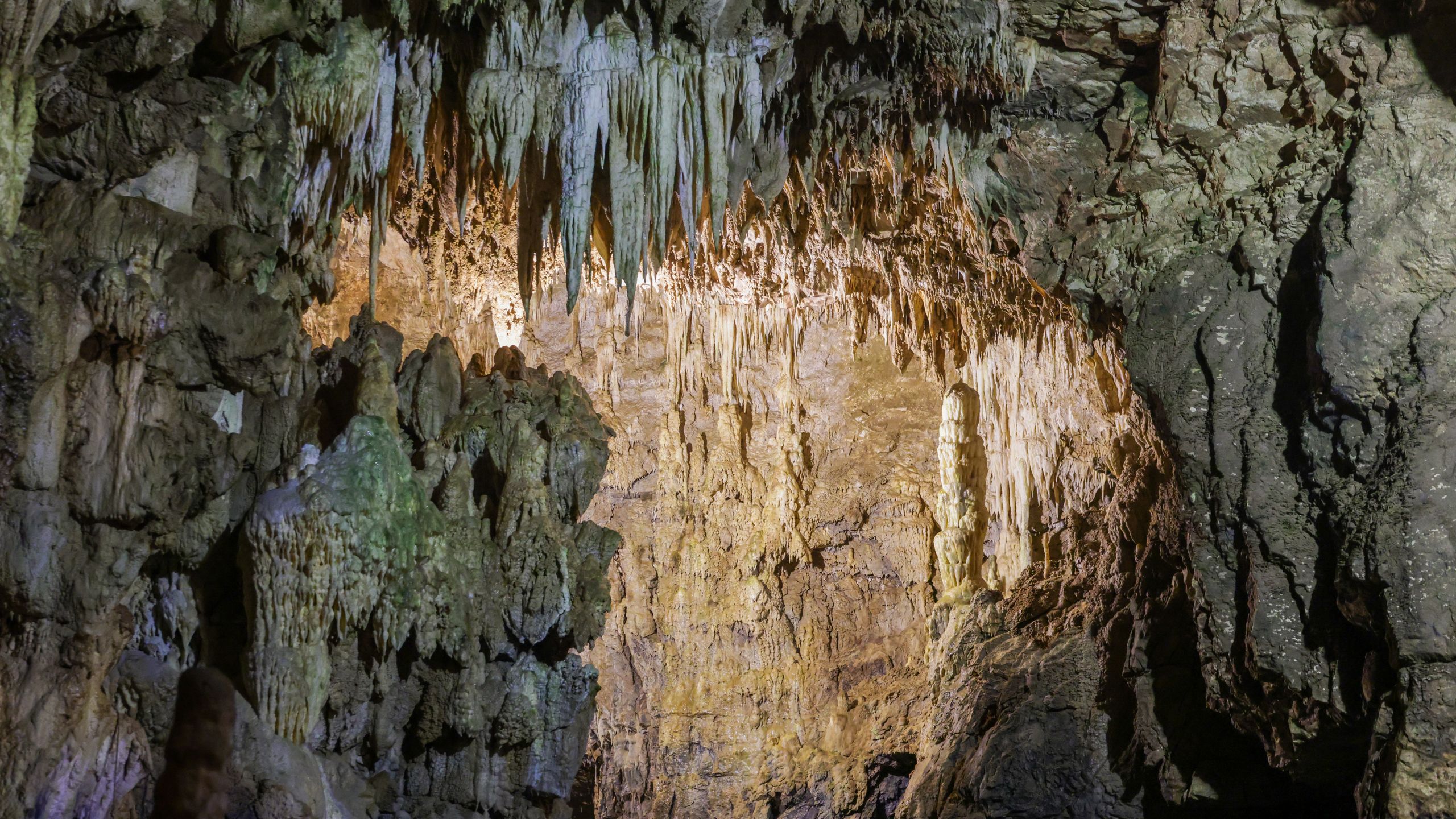
I remember gazing up, my neck craning, at the cathedral-like ceilings, hundreds of feet above. Gigantic stalactites, some resembling frozen waterfalls, others like gnarled, ancient fingers, hang precariously from the roof. Below, their counterparts, the stalagmites, rise from the cave floor, slowly, painstakingly, growing upwards over millennia. Some of these formations have met, creating colossal columns that seem to hold the very mountain on their shoulders.
The colours are subtle but mesmerizing. You’ll see shades of cream, rust, and ochre, stained by various mineral deposits carried by the dripping water. There are sections where the rock glistens, wet with moisture, reflecting the carefully placed lights in a myriad of sparkling points. The guides, usually Omani, are incredibly knowledgeable and point out specific formations, often attributing local names or playful analogies to their shapes – a camel's head here, an old woman's face there. These small, personal touches truly bring the inanimate rock to life.
The walking path itself is approximately 800 metres long, winding through various chambers. While it's well-lit and has handrails in parts, it's still a natural cave, so expect some uneven surfaces and occasional damp spots. Wear comfortable, sturdy shoes – absolutely essential. The journey is at a leisurely pace, allowing plenty of time to stop, gaze, and take it all in. The silence is often broken only by the echo of other visitors' whispers and the incessant, rhythmic drip of water, which is a constant reminder of the geological process still at work.
The Underground Lake and its Blind Inhabitants
One of the most captivating features of Al Hoota Cave is its series of four underground lakes. The tour typically takes you past the largest of these, a serene body of water, astonishingly clear, reflecting the cave ceiling like a mirror. Here, in this perpetually dark environment, thrives a unique ecosystem.
This is where you might catch a glimpse of the famous blind fish. These small, pale creatures have evolved without the need for eyesight, relying instead on highly developed senses of touch and smell to navigate their world. It’s a humbling sight, a testament to nature's incredible adaptability. The guides will often point them out, as they are not always immediately obvious, blending with the rocky bottom. Seeing them dart through the water, oblivious to the light and the humans watching, is a truly memorable part of the experience.
Beyond the fish, the cave is also home to various arthropods, bats, and other creatures adapted to this unique subterranean environment, though they are often shy and less visible to visitors. The cave's delicate ecosystem is precisely why touching any formations or disturbing the natural environment is strictly prohibited – a rule I wholeheartedly support and encourage everyone to respect.
A Glimpse into Geological Time: How Al Hoota Was Formed
The story of Al Hoota Cave is a tale told over millions of years, sculpted by the relentless power of water. The cave system is estimated to be over 2 million years old, carved out of the limestone mountains of the Hajar range. It’s primarily a karstic cave, formed when rainwater, slightly acidic from absorbing carbon dioxide in the atmosphere, seeps through cracks and fissures in soluble rock like limestone.
Over vast expanses of time, this slightly acidic water slowly dissolves the rock, enlarging cracks into channels, and eventually, into vast chambers. The stunning stalactites and stalagmites are formed by the reverse process: as water drips from the cave ceiling, it leaves behind minute deposits of calcite, slowly building these incredible formations, drop by precious drop. It's a slow, constant, and awe-inspiring process that continues to shape the cave even today.
The cave system itself extends for approximately 4.5 kilometres, though only a small, carefully managed section of about 860 metres is open to the public to ensure the preservation of its delicate natural environment. This managed access ensures that future generations can also marvel at this geological wonder.
Planning Your Al Hoota Adventure: Essential Practical Details
To make your visit to Al Hoota Cave as smooth and enjoyable as possible, here’s everything you need to know, straight from a local who’s been there many times:
Location and Getting There
Al Hoota Cave is located in the Al Hamra region, at the base of Jebel Shams, Oman's highest mountain. It’s conveniently situated near Nizwa, making it an excellent day trip destination from the historic city.
- From Nizwa: It’s approximately 40-50 kilometres, a drive of about 45 minutes to an hour. The road is well-paved and clearly signposted.
- From Muscat: The drive is about 150 kilometres and takes approximately 1.5 to 2 hours, depending on traffic and your starting point in Muscat. You'll take Highway 15 towards Nizwa, then follow signs towards Al Hamra and Jebel Shams, turning off for Al Hoota Cave.
A 4x4 vehicle is not necessary for reaching the cave itself, as the roads are paved. However, if you plan to combine your visit with further exploration into Jebel Shams or other off-road wadis, a 4x4 would be advisable for those subsequent legs of your journey.
Opening Hours
The cave has specific operating hours, and it's always wise to double-check their official website (www.alhootacave.com) before your visit, as these can occasionally change or be affected by public holidays.
- Saturday to Thursday: 9:00 AM to 1:00 PM, then 2:00 PM to 5:00 PM.
- Friday: Closed (this is typical for many attractions in Oman, being the main prayer day).
- Last admission: Usually one hour before closing.
Important Note: The cave sometimes closes for maintenance or during periods of heavy rain (though this is rare and usually announced). Always check ahead!
Ticket Prices (as of my last visit)
Prices are quoted in Omani Rials (OMR):
- Adults (Non-Omani): OMR 7.000
- Children (Non-Omani, aged 6-12 years): OMR 3.000
- Children (under 6 years): Free
- Adults (Omani): OMR 3.500
- Children (Omani, aged 6-12 years): OMR 1.000
These prices include the electric train ride and the guided tour inside the cave. It's excellent value for such a unique experience.
Best Time to Visit
- Months: The cooler months of October to April are ideal for visiting Oman in general, and Al Hoota is no exception. While the cave itself maintains a consistent cool temperature, the journey there and any outdoor activities you combine it with will be much more pleasant during this period.
- Time of Day: I recommend visiting either first thing in the morning (around 9:00 AM) or later in the afternoon (around 3:00 PM). The midday slots can be busier, especially during peak tourist season. An early morning visit often means fewer crowds and a more tranquil experience inside.
What to Wear and Bring
- Footwear: This is crucial. Wear comfortable, closed-toe walking shoes with good grip. The paths can be damp and occasionally uneven. Sandals or flip-flops are a definite no-go.
- Clothing: Light, comfortable clothing is fine. While the cave is cool, you'll be doing some walking. A light jacket or long-sleeved top might be appreciated by those who get chilly easily, but it's not strictly necessary.
- Water: Bring a reusable water bottle for before and after the cave tour. You won't be able to drink inside.
- Camera: Photography is permitted, but flash photography is generally discouraged to protect the delicate environment and not disturb the wildlife. A good low-light camera or smartphone will do well. Tripods are usually not allowed.
- Small backpack: To carry your essentials.
Beyond the Depths: What Else is Nearby?
A trip to Al Hoota Cave can easily be combined with other incredible sights in the surrounding region, making for a fantastic full-day or even multi-day itinerary. This area is rich in history, culture, and natural beauty.
Nizwa: The Heart of Oman
Just a short drive from Al Hoota, Nizwa is a must-visit. It was once the capital of Oman and retains a strong sense of tradition and history.
- Nizwa Fort: A magnificent 17th-century fortress with a fascinating history. Climb to the top of its massive circular tower for panoramic views of the city and surrounding date plantations.
- Nizwa Souq: One of Oman's oldest and most vibrant traditional markets. Wander through its labyrinthine alleys, browsing for exquisite silver jewellery, traditional Omani daggers (khanjars), pottery, spices, and fresh produce. The Friday morning cattle market is an unforgettable experience if your visit aligns.
Al Hamra and Misfat Al Abriyeen: Ancient Villages
Near Al Hoota, these villages offer a glimpse into traditional Omani life.
- Al Hamra: Home to some of the oldest preserved mud-brick houses in Oman, some over 400 years old. Take a stroll through the abandoned old quarter.
- Misfat Al Abriyeen: A stunning mountain village built into the side of a cliff, famous for its unique stone houses, ancient falaj irrigation system, and lush date palm terraces. It's an incredible place for a gentle walk and to experience true Omani village charm. There are even a few guesthouses if you want to stay overnight.
Jebel Shams: The Grand Canyon of Arabia
If you have a 4x4 and a full day, consider extending your trip to Jebel Shams. The famous Balcony Walk (W6 trail) offers breathtaking views into Wadi Ghul, Oman's 'Grand Canyon'. The drive up is an adventure in itself, and the cooler mountain air is invigorating.
Local Tips and Insider Secrets for Your Visit
Having visited Al Hoota Cave multiple times over the years, I've picked up a few pointers that can enhance your experience:
- Book Ahead (Especially Peak Season): While not always mandatory, especially outside of peak tourist season or public holidays, booking your tickets online through their official website can save you time and guarantee your slot, particularly if you're visiting with a larger group.
- Combine with a Cultural Lunch: After your cave adventure, head to a local restaurant in Al Hamra or Nizwa for an authentic Omani lunch. Try Shuwa (slow-cooked lamb) if you can find it, or a fresh fish dish. It's a wonderful way to connect with the local culture.
- Take Your Time Inside: Don't rush through the cave. Pause, listen to the water, look at the intricate details of the formations, and truly absorb the atmosphere. The guides are usually happy to answer questions.
- Look for the 'Lion' and 'Camel' Formations: Many formations have acquired nicknames over time. Ask your guide to point out the 'Lion' or the 'Camel' – it adds a fun, interactive element to the tour, especially for children.
- Respect the Environment: Al Hoota is a living cave. Please do not touch any formations, as the oils from your skin can halt their growth. Stick to the designated paths and do not litter. This preservation ensures the cave remains pristine for generations to come.
- Consider a Local Guide for the Surrounding Area: While the cave itself has its own guides, hiring a local Omani guide for your day trip around Nizwa, Al Hamra, and Misfat can enrich your experience immensely. They offer invaluable insights into the history, culture, and lesser-known gems of the region.
My Final Thoughts on Al Hoota Cave
Every time I emerge from Al Hoota Cave, blinking into the bright Omani sunshine, I feel a renewed sense of wonder and gratitude for the natural treasures our country holds. It's a journey that transcends mere sightseeing; it's an immersive experience that reminds you of the incredible power of nature and the passage of geological time.
The cool, silent depths of Al Hoota are a stark contrast to the vibrant, sunny landscapes above, offering a unique perspective on Oman's diverse beauty. It’s a place where history, geology, and a delicate ecosystem converge, creating a memory that’s both educational and deeply personal. Whether it’s the thrill of the train ride, the majesty of the ancient formations, or the quiet wonder of the blind fish, Al Hoota Cave leaves an indelible mark on every visitor.
So, pack your sturdy shoes, prepare your sense of adventure, and get ready to delve into one of Oman's most breathtaking secrets. Al Hoota Cave isn't just an underground wonder near Nizwa; it’s an invitation to explore the very soul of our ancient land, a journey I promise you won’t soon forget. Come, discover the magic for yourself – the heart of the Hajar Mountains awaits!
Written by Farees
Travel writer and founder of Oman Explorer. Based in Muscat, Oman, with years of experience exploring the Sultanate's hidden gems, ancient forts, stunning wadis, and desert landscapes. Passionate about sharing authentic travel experiences and helping visitors discover the beauty of Oman.
Learn more about the authorMore Articles to Explore


Comments (0)
Sign in to comment
Create a free account or sign in to join the conversation.
No comments yet. Be the first to comment!