
The People of Oman : Omanis
Oman's people were shaped by two frontiers: the sea and the desert. Sailors, fishermen, date farmers, mountain herders, city merchants and desert Bedu all built distinct ways of life on the same land. Oil later brought new jobs and fast change, yet much of the old way survived, held together by a shared Islamic faith and a deep sense of courtesy.
This piece draws on a classic illustrated portrait of Oman from the Sultan Qaboos era. It captures the country as it was a few decades ago, when many of these traditions were still part of daily life.
Origins and tribes
Omanis have long traced their roots to two great Arab lines. The Qahtan tribes came up from Yemen in the south, while the Nizar (or Adnan) tribes migrated down from north-west Arabia. Centuries of trade with East Africa, Persia and India added further layers to the population, especially along the coast.
Oman is, above all, a country of tribes. Even a clan of one or two families keeps its own proud traditions. For much of the last two and a half centuries, politics revolved around two rival blocs, the Hinawi and the Ghafiri, named after the Bani Hina and Bani Ghafir tribes. Other notable groups include:
Bani Riyam — guardians of the Jebel Akhdar and its southern approaches
Bani Ruwaha — home of the Khalili family, from which Imam Muhammad al Khalili came
Hawasina — controllers of the Wadi Hawasina and traditional guards of the ruling family
Hirth — powerful in the Sharqiya and key to Oman's East African settlements
Awamir — renowned builders and keepers of the falaj water channels
Duru, Wahiba, Harsusi and Janaba — desert tribes of the plains
The book groups Omanis into six broad communities: the seafaring townsfolk of Muscat, Mutrah, Sohar and Sur; the farmers of the Batina coast; the settled Hadhr of interior towns such as Nizwa and Rostaq; the Bedu of the plains; the Shihuh of the Musandam mountains; and the people of Dhofar in the south.
People of the coast
For coastal Omanis, the sea has always been the main highway. Sailing followed the monsoon: ships rode the north-east winds down to Zanzibar and East Africa from December, then came home on the south-west monsoon between April and September, loaded with ivory, tortoiseshell and other goods.
In its heyday, Muscat sent out ships of 300 to 600 tons, the finest being the carved baghala. They carried muslin from Bengal, spices from the Far East, timber and rice from Malabar, and coffee from Mocha. Indian merchant families settled in Muscat for generations and prospered on this trade.
The markets of Muscat and Mutrah mixed people of every background. Unlike most Eastern bazaars, prices were usually fixed and haggling was not the custom. Wealthy merchants kept summer gardens inland, a habit that still drew families to places like Seeb.
Fishermen and farmers
Whatever the cargo of the day, Oman's fishermen kept working the same ancient trade. Sardines and kingfish were staples, dried on the beaches and traded inland for dates and grain. The old dugout canoes, called huris, were gradually fitted with outboard motors, and at night their lamps dotted the dark sea.
Along the Batina coast, date plantations stretch roughly 200 miles from Muscat towards Khor Fakkan. Water was once drawn from wells by a bull or camel walking down a ramp; mechanical pumps later took over. Mangoes, figs and Indian almonds thrived here, and the plain behind the gardens fed herds of camels, goats and donkeys.
Life in the Interior
The heart of Oman is the Jebel Akhdar, the "Green Mountain", and the towns around it: Nizwa, Rostaq, Izki and Bahla. Each has served as a capital at some point, and the Ibadhi form of Islam, found almost nowhere else, has its deepest roots here.
Water and the falaj
Life in the Interior depends on the falaj, an ancient network of channels that carries water from springs and underground sources to villages and date groves. Its use is tightly regulated, covering not just irrigation but drinking, washing and the ritual washing before prayer. Wheat and maize grow beneath the palms, while palm fronds supply building material and even small shasha boats.
The market
Every interior town has its walled market, usually close to the fort. Silversmiths shape khanjars and jewellery, spice sellers pile up cardamom and nutmeg, and the halwa maker stirs great copper pots of the famous sweet. In Nizwa, a livestock auction is held under a large tree, with animals led in circles while buyers bid from a seated ring. These markets were as much a meeting place and news forum as a place to trade.
Shared work
Village roles were clearly divided. Men ploughed, tended date groves, dug wells, traded at market and went hunting. Women cooked, fetched water, washed, wove and made cloth, and also did much of the field labour, such as harvesting wheat. Children of both sexes herded goats and sheep until around age eight, when boys began joining the men's work.
Food, dress and hospitality
Food
Dates, rice, fish, meat and wheat bread form the core of the Omani diet. A day often began with dates and coffee, sometimes with sour milk or thin wheat bread with honey. The main meal came at noon: rice with fish, meat or chicken stew. Evening meals were lighter. For honoured guests there was khuzi, a whole goat or sheep served on a mound of rice. And no visit was complete without halwa, the rich sweet made from starch, sugar, ghee and cardamom.
Coffee and incense
Offering qahwa (coffee) is the heart of Omani hospitality. Guests typically take about three small cups, then shake the cup to signal they have had enough. At the end of a visit, a smoking censer of incense is passed around. Once it has gone round, the gathering is over.
Dress
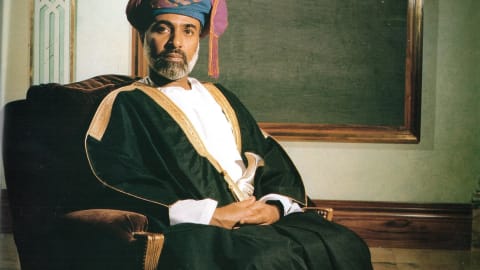
The traditional Omani man wears a long white dishdasha with a small tassel at the neck, a turban or embroidered cap, and a silver-sheathed khanjar at his belt. Over it he may wear a bisht, a fine cloak. Visitors in the early 1800s admired how little dress separated rich from poor.
Women's clothing varies widely by region, but is often far more colourful than elsewhere in Arabia: oranges, yellows, purples and greens, with embroidered trousers gathered at the ankle. Some Bedu and coastal women wear a burqa, a stiff face mask, while others go unveiled.
Manners
Travellers across the centuries praised Omani courtesy. Greetings are long and repeated, with friendly enquiries about health and news exchanged before any business begins. Hospitality is treated as a sacred duty; even the poorest Bedu would share a meal with a stranger.
Family, marriage and women
Family sits at the centre of Omani life. Marriages were traditionally arranged between families, often between cousins, and the groom gave the bride a mahr, or bridal gift, which remained her own property. Sultan Qaboos set a fixed cap on this bride price to stop costs spiralling.
Weddings stretched over several days of feasting, music and dancing, usually with separate gatherings for men and women. Brides wore gold jewellery kept for the occasion, and their hands and feet were decorated with henna. The legal contract was witnessed before the Qadhi, the religious judge.
The book stresses that Omani attitudes towards women were gentler than in much of Arabia. Women were less confined, often went unveiled, dressed in vivid colours, and moved freely in daily life. One custom struck visitors in particular: the man walking while the woman rode the donkey. Education for girls was already seen as a major step in the country's modernisation.
Rites of passage were marked carefully. A birth, whether of a boy or a girl, brought celebration, and the dead were washed, wrapped in white cloth and buried the same day by close male relatives.
Local authority
For centuries, Omani towns were run by two figures. The Wali, appointed by the central government, acted as governor and settled local disputes. The Qadhi, a judge, interpreted Islamic law. Both roles often passed through families who served the state for generations, sometimes in postings as far away as Gwadur or the East African coast.
Tribal shaikhs kept real influence alongside them. The 14th-century traveller Ibn Battuta described a ruler in Nizwa who sat outside his own gate to hear anyone who came, with no chamberlain to keep people away. Remarkably, some Walis of the Interior held open audiences at their fort gates in much the same way until quite recently.
Peoples of the frontiers
Dhofaris
Around 600 miles of desert separate Dhofar from northern Oman, so its people developed differently, with old ties to South Yemen through the frankincense trade. Mountain tribes such as the Qara, Shhero and Al Kathir live alongside the Mahra of the lower valleys. Besides Arabic, many speak their own South Arabian languages: Mahri, Jibbali (Shheri) and Bathari.
The summer monsoon turns Dhofar's bare hills green, and its herders raise small cattle, camels, goats and sheep with great affection. Salalah also has a large community of African origin, whose street dances and bright clothes enliven religious holidays. Sultan Qaboos himself was half Dhofari.
The Shihuh
In the rugged Musandam peninsula at Oman's northern tip live the Shihuh, a small tribe with a distinctive character. They carry a small long-handled axe as their badge, live in simple stone or mud houses, store precious rainwater in tanks, and fish along the coast. In the village of Kumzar, people speak a language related to Persian.
The Bedu
The Bedu roam the deserts west and south of the Omani heartland, moving with their herds across huge distances. Their tents are often small and simple, and their belongings few: a coffee pot, a kettle, a rug and saddlebags. Wilfred Thesiger, who travelled with them, admired a life stripped to bare necessities that nonetheless produced great nobility.
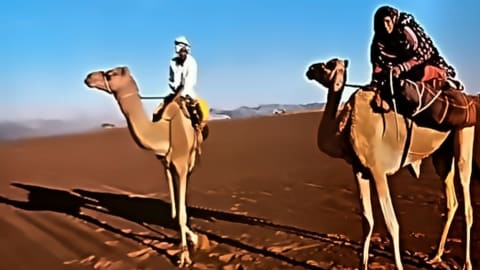
Bedu value patience, generosity, loyalty and courage above all. Omanis ride camels in a style unlike the rest of Arabia, often kneeling in a small saddle set behind the hump. Their greetings are famously long and formal, every person asking after every other, until at last someone asks the traditional question: "What is your news?"
The islanders
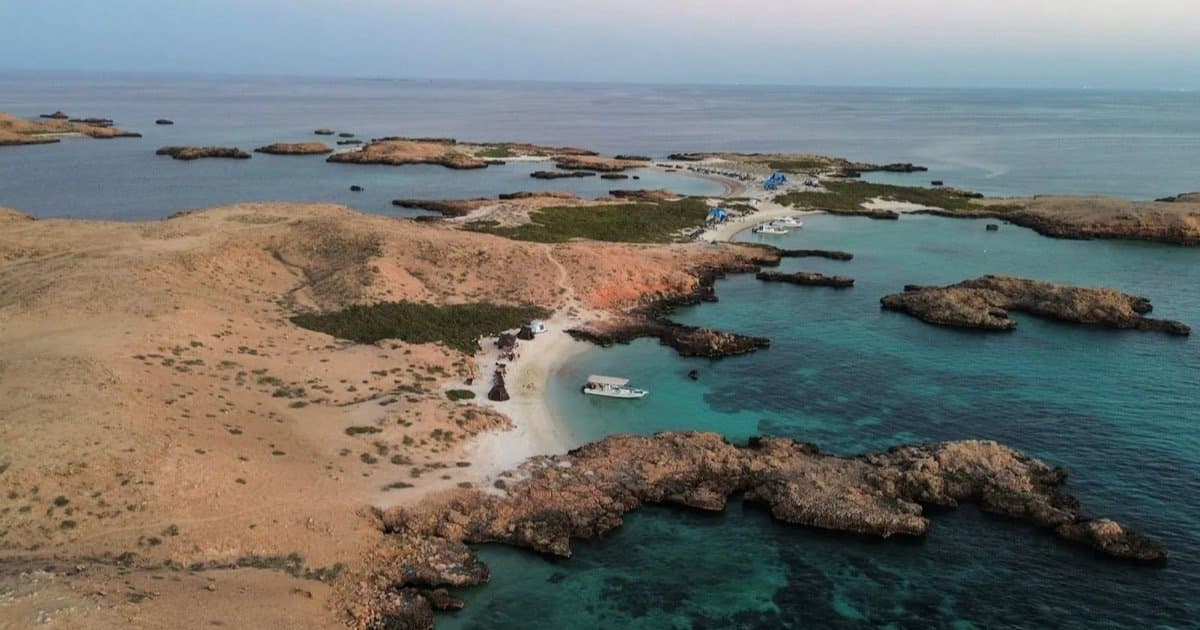
Off Oman's coast, island life took its own course. Masira Island is a miniature of the mainland, with mountains, plains and palms. The five tiny Kuria Muria Islands off Dhofar were given to Britain in 1854, mined briefly for guano, and returned to Oman in 1967.
Festivities
Omanis celebrate most joyfully at the two Eids, at weddings and on National Day.
Eid al-Fitr ends the fasting month of Ramadan with family visits, new clothes, music and dancing. Men perform sword dances, once a form of military training, and celebratory gunfire rings out.
Eid al-Adha falls about seventy days later, when families make a sacrifice as the Hajj pilgrimage reaches its peak.
Weddings bring feasting and stately dances in which men move in formation with swords or rifles, to traditional drums and pipes.
National Day is marked with military parades and public celebrations in honour of the Sultan.
Camel racing is a beloved pastime, and the music of the coast carries strong African rhythms, a reminder of Oman's long reach across the Indian Ocean.
A heritage that endures
From Musandam's cliffs to Dhofar's green monsoon hills, Oman's people are remarkably varied, yet bound by common threads: faith, family, tribe, and a hospitality that has impressed visitors for centuries. Much has modernised since these pages were written, but the coffee pot, the khanjar and the long, warm greeting remain at the heart of Omani identity.
Written by Farees
Travel writer and founder of Oman Explorer. Based in Muscat, Oman, with years of experience exploring the Sultanate's hidden gems, ancient forts, stunning wadis, and desert landscapes. Passionate about sharing authentic travel experiences and helping visitors discover the beauty of Oman.
Learn more about the authorMore Articles to Explore
Comments (0)
Sign in to comment
Create a free account or sign in to join the conversation.
No comments yet. Be the first to comment!