Oil and Minerals in Oman
How oil changed a country
Oman never had the huge oil reserves of its Gulf neighbours. Even so, the money from oil, along with new leadership, lifted a stagnant economy and paid for big development plans. The sharp rise in world oil prices in 1973 made it worth developing fields that would otherwise have been too costly to produce. New finds in the south during the 1980s suggested the wells would keep flowing past 2000. Natural gas was kept back for power generation and local industry.
A slow start
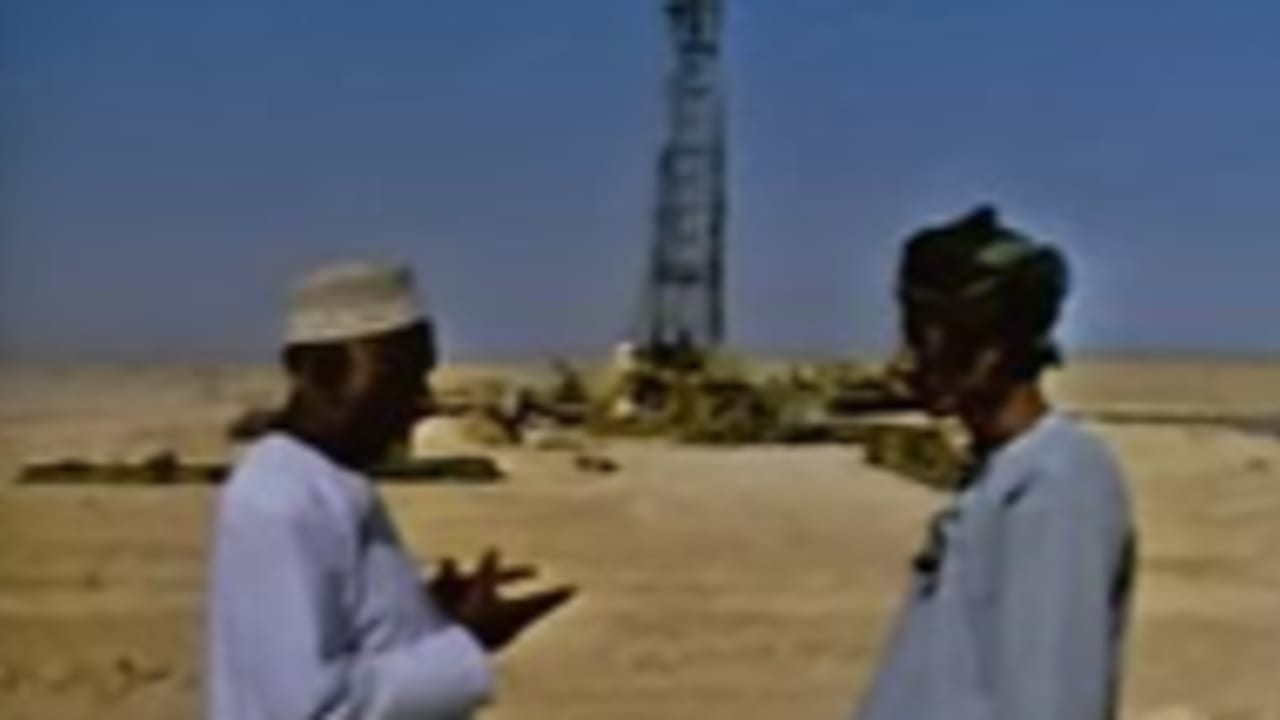
The first oil concessions were granted in 1937. In the 1950s the search moved to Fahud in the north-western desert, which looked like an ideal oil-bearing structure. Years of drilling there found nothing, and BP and the American partners pulled out. The consortium that remained was Petroleum Development Oman (PDO). Shell owned most of it, with smaller stakes held by Compagnie Française des Pétroles and Partex.
The partners who stayed were rewarded. Oil was found at Yibal in 1962, and by 1964 Fahud was confirmed as commercially viable. The first tanker of Omani crude left Mina al-Fahal on 1 August 1967. Fahud sits on the edge of the Empty Quarter, on grazing land used by the Duru tribe. Care was taken to protect their traditional rights and to give them jobs at the oil sites, and the Harasis and Janaba tribes were treated the same way.
Growth and state ownership
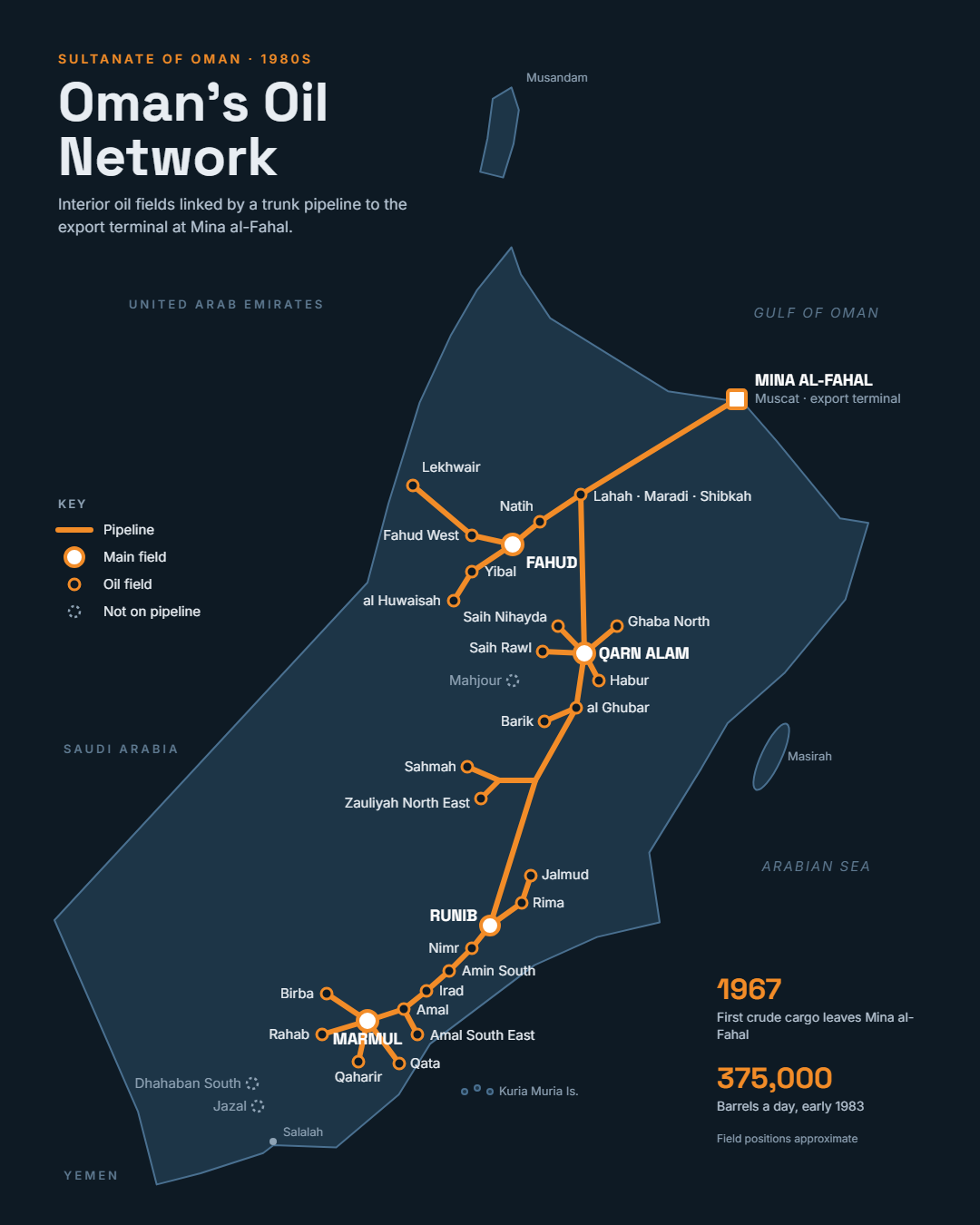
New fields were discovered in Central Oman in 1973 and in the Lekhwair area. Together they pushed output to about 368,000 barrels a day by 1976. The government took a 60% share of PDO in 1974. In 1977 it signed a long-term deal to develop the southern fields around Marmul. In 1980 a royal decree made PDO a limited liability company based in Oman.
The Ministry of Petroleum and Minerals then invited other companies to explore:
Elf Aquitaine was producing about 12,000 barrels a day from its Sahmah field by 1983.
BP-Deminex, Amoco, Gulf, Japex and a Japanese group led by Teikoku explored other parts of the country, both onshore and offshore.
The Rima field in the south opened in October 1982. By early 1983, national output had reached about 375,000 barrels a day.
Infrastructure
Pipeline: Oil is pumped from the main fields to a high point in the mountains, then flows downhill by gravity to the coast. Running the pipeline north meant smaller oilfields along the way could also be connected.
Export: Tankers load at offshore buoy moorings near Fahal Island, which can take the largest ships afloat.
Refinery: A refinery at Mina al-Fahal opened in 1982 with a capacity of 50,000 barrels a day. It supplies fuels for use inside Oman.
Gas: Gas pipelines run alongside the oil lines. They supply the oilfields, a power and desalination plant at al-Ghubrah, and the copper works at Sohar. The aim was to use gas instead of burning it off.
Oman is not a member of OPEC, but it works closely with its neighbours through the Gulf Cooperation Council. PDO trained about a hundred Omanis each year so that local staff could gradually replace foreign workers.
Minerals
Copper may be Oman’s most valuable resource after oil and gas. In ancient times the country was known as Magan and was supplying copper to Sumerian cities around 2500 BC. Its main copper-bearing rock formation, the Samail complex, is similar to the copper-rich Troodos complex in Cyprus but about ten times larger.
In 1973 a concession covering more than 34,000 square miles went to a Canadian–American partnership. The government later took a 51% stake. Helicopters made it possible to survey the Hajar mountains. The first copper orebody was hit at Lasail in early 1974, and by 1976 surveys had found 119 mineral sites. A state copper refinery at Sohar began operating in January 1983, with a planned output of about 20,000 tonnes a year. Reserves were expected to last roughly twelve years.
Other deposits were also found: chrome, nickel, iron, manganese, coal, asbestos, limestone, gypsum, marble and phosphates. A cement plant was due to open in 1983. Ancient mine workings found in places like Wadi Jizzi were protected as historical sites.
Written by Farees
Travel writer and founder of Oman Explorer. Based in Muscat, Oman, with years of experience exploring the Sultanate's hidden gems, ancient forts, stunning wadis, and desert landscapes. Passionate about sharing authentic travel experiences and helping visitors discover the beauty of Oman.
Learn more about the authorMore Articles to Explore

Comments (0)
Sign in to comment
Create a free account or sign in to join the conversation.
No comments yet. Be the first to comment!